Our Experience at the WHO Nursing Action Meeting
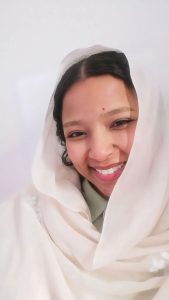
This blog was written by Nursing Now Challenge members, Daphne and Emma.
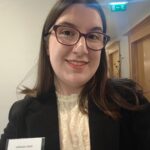
Daphne is an early-career nurse from Greece and currently works in a General Surgery Clinic at Chirec Hospital in Belgium. Besides her professional career, she is involved with programmes like the Nursing Now Challenge and the Hellenic National Nurses Association (HNNA). In the past, she was a board member in the student sector of HNNA and she also represented the HNNA in the European Nursing Students’ Association (ENSA). Through these experiences she learned the importance of networking, building professional relationships and exchanging ideas with people who share similar interests and goals. She also realised that being involved in organisations and global networking can open doors to new opportunities and help her discover different ways to contribute to nursing beyond clinical practice.
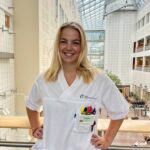 Emma is an early-career nurse from Norway and works in hematology. Emma works as a practice development nurse. In her role, Emma works on quality improvement projects and supporting colleagues with guidance. Emma has also been an active contributor in media presence, authoring op-eds from a nursing perspective. Emma is driven by her dedication to a positive work environment where nurses thrive.
On 14th October, we attended the 4th Nursing Action Meeting in Dublin, Ireland, entitled “Optimizing Nursing Workloads and Skill Mix Through Digital Solutions.” This meeting was organised by the World Health Organization (WHO) as part of the European Union-funded Nursing Action Project. We participated as early-career nurses from different backgrounds sharing our perspectives on the use of digital tools in health systems.
Our motivation for participating came from our wish for a better and more sustainable future for nurses. We believe that, as early-career nurses, we have valuable perspectives on how nursing workloads can be optimised and how digital tools can help improve our daily work. The meeting gave us the opportunity to share our experiences and represent early-career nurses among European healthcare leaders.
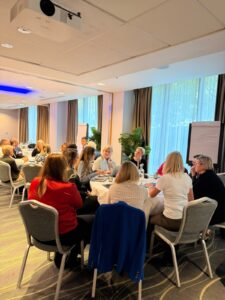
During the day, we listened to inspiring speakers, including Natasha Azzopardi Muscat, Director of health systems of WHO Regional Office for Europe and Loretto Grogan, National Chief Nursing and Midwifery Information Officer at Health Service Executive and learned about European policies on digital technologies and digital health. We also took part in a roundtable discussion, where we shared our experiences with digital systems and how they affect our practice. Afterwards, we joined a World Café, where we discussed different topics related to digital solutions with other participants.
One of our biggest takeaways was that digital transformation is not simply about introducing new technologies. Digital solutions should help reduce unnecessary workloads, make everyday tasks more efficient and support safe, high-quality patient care. For this to happen, nurses need to be involved in the development and implementation of these tools.
The discussions with participants from different countries were among the most valuable parts of the meeting. Although healthcare systems are organised differently across Europe, we realised that we face similar challenges when it comes to nursing workloads. Hearing other people’s experiences helped us look at these challenges from different points of view and better understand how they affect our profession.
As early-career nurses, we have perspectives shaped by both our experiences as students and our first years of professional practice. We understand how policies and decisions can directly affect our everyday work. During the meeting, we had the opportunity to share our views and speak up when we disagreed with others. We were heard and our perspectives and experiences were recognised and acknowledged, which reminded us that even at the beginning of our careers, we can contribute to change.
Another important aspect of the experience was meeting people with different backgrounds and responsibilities. We realised how important networking, exchanging ideas and building professional relationships are for our personal and professional development. We were particularly impressed by Professor Gemma Stacey, Programme Director of the Nursing Now Challenge and Gillian Jones, whose warm and approachable personalities highlighted the importance of soft skills in building good relationships with others.
The experience reminded us that professional associations and international networks, such as the Nursing Now Challenge, can create opportunities to learn from others and contribute to nursing beyond clinical practice. And when those opportunities come along it is important that we grasp them with both hands.
We strongly encourage other early-career nurses to take similar opportunities, become involved in professional associations and share their perspectives. By connecting with colleagues from different countries and working together, we can contribute to discussions that will shape the future of our profession.
We may be early in our careers, but our experiences and perspectives matter. And this is just the beginning!