The Moment I Found My Voice: How Health Action Training Shaped My Global Nursing Journey
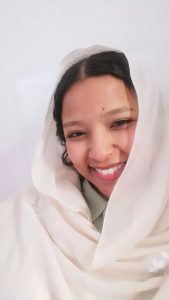
This blog post was written by Kathryn Luanne Sanico, RN, PgCert, PgD International Health & member of the Challengers’ Committee
In the words of Florence Nightingale, “For us who Nurse, our Nursing is a thing which, unless in it we are making progress every year, every month, every week—take my word for it—we are going back.” (Nightingale, c. 1872, as cited in McDonald, 2004)
This timeless insight emphasises the need for continuous growth in nursing. It remains deeply relevant today—especially as the International Council of Nurses (ICN) formally redefined the role of the nurse in June 2025, highlighting nurses as:
“Science-based, practice-informed professionals who provide evidence-informed, person-centred care and who advocate for health in all settings and stages of life—through clinical excellence, research, education, and leadership, across physical and virtual borders.” (International Council of Nurses, 2025)
This quote resonates deeply with my journey as I continue to grow in the field of global health nursing. I found my voice through Health Action Training (HAT) – a free, high-impact, simulation-based programme that nurtures self-mastery, empathy, social skills, and stress resilience in nurses.
HAT has equipped me, not just with clinical communication techniques, but with emotional and interpersonal intelligence that are vital in austere environments—those marked by conflict, limited resources, or disaster zones. As a nurse preparing for possible field engagement with Médecins Sans Frontières (Doctors Without Borders), this training has provided a foundation for realistic, scenario-based learning that familiarises me with the demands of prolonged field care. It helps shape confident decision-making, emotional stability, and practical action, particularly under pressure.
As an emerging austere nurse—defined as one trained to deliver care in resource-constrained or unstable environments—I have come to understand that success in global nursing does not rely on equipment alone but on emotional agility and values-based leadership. This training fosters that capacity through applied drama and reflective practice that simulate high-pressure decision-making without compromising patient safety. Evidence from peer-reviewed studies supports this: simulation-based communication training has shown a 30% improvement in confidence levels among emergency nurses (Foronda et al., 2020).
Through HAT, I’ve come to see emotional intelligence as part of the nursing DNA. At the heart of self-awareness lies our ability to read emotional currents and navigate power relationships—not just in hospitals, but in displaced communities, conflict settings, and humanitarian zones. Emotional regulation and empathy are not optional—they are vital competencies that support ethical, high-quality care.
Global health nursing is equity in action. As frontline professionals, we are stabilisers and innovators in a fragile system. This means that our training must reflect real-world pressures. From climate-induced disasters to epidemics and forced displacement, we are called to do the right thing—justifiably, equitably, and effectively. HAT allows us to rehearse this “right thing” through guided role-play, collaborative learning, and shared reflection. In this learning space, we become both actors and architects—leaders and servants—aware of how each word and action contributes to healing.
In line with the International Council of Nurses (ICN) and the WHO’s International Health Regulations (IHR 2005), I believe nurses must uphold our obligation to provide evidence-based care in all settings, including virtual health environments. As a certified international telehealth nurse and Nursing Now Challenge, Challengers’ Committee member for the Eastern Mediterranean Region, I believe that the way forward is through data-driven, credentialed, and ethically sound practice. We must remain committed to credentialing integrity, cyber hygiene, and disaster preparedness across platforms—be it face-to-face or telepresent care.
Nursing research tells us that emotionally intelligent teams improve patient safety, reduce medical errors, and enhance organisational performance (Codier et al., 2015). In humanitarian settings, emotionally attuned communication can determine the difference between cohesion and collapse. This is why I advocate for HAT—not just as a course, but as a culture. Its value is not only clinical; it is cultural, psychological, and organisational.
Let us encourage every nurse—wherever you are in the world—to invest in training that strengthens our ability to serve with clarity, resilience, and compassion. Health Action Training is not just a programme; it is a path to readiness. And readiness, in global nursing, is everything.
Learn more about Health Action Training here.
Join us on 23rd July at 11am BST for a Health Action Training Information Session.
References
Codier, E., Freitas, E. and Muneno, L., 2013. Developing emotional intelligence ability in oncology nurses: A clinical rounds approach. Asia-Pacific Journal of Oncology Nursing, 1(1), pp.21–26. https://doi.org/10.4103/2347-5625.135813
Foronda, C., Fernandez-Burgos, M., Nadeau, C., Kelley, C.N. and Henry, M.N., 2020. Virtual simulation in nursing education: A systematic review spanning 1996 to 2018. Simulation in Healthcare, 15(1), pp.46–54. https://doi.org/10.1097/SIH.0000000000000411
International Council of Nurses (ICN), 2021. Core competencies in disaster nursing version 2.0. [online] Geneva: ICN. Available at: https://www.icn.ch
World Health Organization (WHO), 2005. International Health Regulations (2005). 3rd ed. Geneva: WHO Press. Available at: https://www.who.int/publications/i/item/9789241580496
World Health Organization (WHO), 2022. Global strategy on digital health 2020–2025. [online] Geneva: WHO. Available at: https://www.who.int/publications/i/item/9789240020924
McDonald, L. (2004). Florence Nightingale on women, medicine, midwifery and prostitution. Wilfrid Laurier University Press.
International Council of Nurses. (2025, June). Definition of nursing. https://www.icn.ch
Biography
Kathryn Luanne Sanico advocates for a more connected, ethical, and equitable global nursing future—not by reshaping the nursing field alone, but by helping fellow nurses adapt, access, and lead in rapidly evolving healthcare environments. She facilitates access to critical knowledge and evidence-based innovations, particularly in the fields of telemedicine, telehealth, and nursing informatics, ensuring that nurses—regardless of geography—are empowered to deliver competent, culturally attuned, and credentialed care.
“In this age of networks and noise, the true nurse still carries the lamp—only now, it shines across borders and screens.”- NurseKath
Her mission is to serve as a bridge across disciplines, digital divides, and borders, especially in underserved and austere settings. She supports the translation of nursing insights into scalable models that align with global standards, including the International Health Regulations (2005) and Sustainable Development Goal 3 (Good Health and Well-being). These solutions are intended not only to address urgent health challenges but to be replicable, policy-ready, and impactful for future system-wide health reforms.
Kathryn is a registered nurse in the Philippines, with a Postgraduate Certificate and Diploma in International Health, currently completing her master’s degree at the University of the Philippines Open University under the Faculty of Management and Development Studies. She is an alumna of the University of the Philippines Visayas – Iloilo, where she completed her secondary education.
She serves as Public Image Chair for Mental Health in Rotary International District 3850, Philippines, advocating for stigma-free, inclusive community mental health awareness. Kathryn is also an Associate Member of the International Society of Transcultural Nurses, dedicated to promoting culturally competent care.
In May 2025, she joined the Nursing Now Challenge as a Challengers’ Committee Member for the Eastern Mediterranean Region, where she contributes to initiatives on credentialing integrity, interdisciplinary preparedness, and resilience-building for frontline nurses. She is also a certified international nurse in telemedicine and e-health since 2021 and a long-time supporter of Médecins Sans Frontières (Doctors Without Borders)—committed to one day serving in austere environments where care is needed most.