From Participation to Responsibility: Advancing Nursing Leadership in Central Asia
This blog was written by Khilola Turabekova, an early-career nurse from Kazakhstan and member of the Challengers’ Committee.
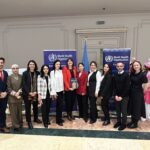
On 11th December 2025, I had the incredible opportunity to participate in a regional meeting in Astana, organised by the WHO Regional Office for Europe, with support from The Burdett Trust for Nursing. This event was not just a professional gathering – it was a turning point, a moment where participation transformed into responsibility for the future of nursing in Central Asia.
The adoption of the Strategic Directions for Strengthening Nursing and Midwifery in Central Asia (2025–2030) is both timely and visionary. These strategies are more than policy statements; they provide a concrete roadmap to strengthen health systems through investment in nursing education, leadership, workforce development, and professional regulation. Witnessing this decision reinforced my belief that we are moving in the right direction, and I feel a deep responsibility to advance these priorities wherever I can.
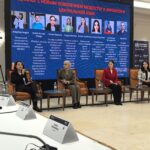
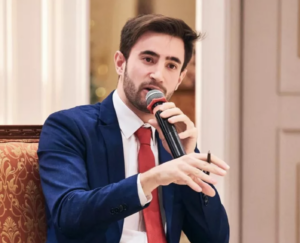
As a young nurse from Kazakhstan, participating in the panel discussion was an honour and a moment of immense personal growth. I shared the perspective of frontline nurses, highlighting the realities, challenges, and aspirations of early-career professionals. I was deeply inspired by my colleagues from Tajikistan, Kyrgyzstan, and Uzbekistan – their passion, curiosity, and commitment to shaping a better nursing future demonstrated that collective strength across borders can drive real change.
One unforgettable moment for me was seeing the engagement of other early-career nurses – their questions, insights, and energy reminded me that the next generation of nursing leaders is already here, ready to innovate, inspire, and lead. It reinforced my conviction that nurses’ voices must be heard, valued, and incorporated into every level of policy and practice.
Globally, nurses represent nearly 60% of the health workforce, and evidence consistently shows that health systems with higher proportions of well-educated nurses achieve better patient outcomes, lower mortality, and higher quality care. Investing in nursing is not merely a professional ambition – it is a strategic investment in patient safety, system resilience, and the health of entire populations.
What makes these strategic directions particularly powerful is their focus on leadership and implementation. Policies are only effective when turned into action. I am committed to promoting these strategies within my workplace, mentoring colleagues, advocating for improvements, and fostering a culture of continuous professional development.
I would not have reached this stage without the extraordinary support from the Nursing Now Challenge and WHO Europe teams. Their guidance, encouragement, and dedication to empowering early-career nurses have shown me that leadership is not a title – it is a responsibility to inspire, act, and advance the profession.
This experience has strengthened my resolve to actively contribute to implementing these strategic priorities, not only locally but across the region. The future of nursing in Central Asia is bright, and with empowered, visible, and engaged nurses, we can transform health care for generations to come.
I invite all early-career nurses to step forward, share their voices, and collaborate across borders. Together, we can build a stronger, more resilient, and empowered nursing workforce – for our patients, for our communities, and for the future of our profession.