Global Vision for Nursing: Connecting, Championing, & Equipping Early-Career Nurses
This blog was written by Hassan Hussain, Registered Nurse, Policy & Advocacy Participation Lead, Doctors of the World UK & Challengers’ Committee member
At this year’s Nursing Live Conference in Birmingham, the Closing Plenary brought together a powerful discussion on the future of nursing. Sharing the stage with Claire Cable, Chief Executive Officer of the Burdett Trust for Nursing, and Hazel Tan, Deputy Ward Manager, Professional Nurse Educator at the Priory Hospital, and Hub Lead for the Western Pacific Nursing Now Challenge, I had the honour of contributing to a session titled “A Global Vision for Nursing: Connecting, Championing, and Equipping Early-Career Nurses.” Together, we explored how the nursing profession can drive global progress through leadership, advocacy, and collaboration.
Our conversation began by examining the global frameworks that continue to shape nursing and midwifery today. The Sustainable Development Goals (SDGs), adopted by the United Nations in 2015, remain a guiding force for achieving universal health coverage, gender equality, and sustainable development. Alongside these, the World Health Organization’s Strategic Directions for Nursing and Midwifery (SDNM) and the State of the World’s Nursing Report 2025 (SoWN) provide a roadmap for strengthening nursing leadership and building resilient, equitable health systems.
With only five years remaining in the SDG era, the new State of the World’s Nursing Report calls on countries to invest in expanding and equitably distributing nursing roles, improving education and working conditions, and developing advanced practice pathways. The report also stresses the importance of preparing nurses for climate-responsive care, promoting gender equity, and ensuring protection for those working in fragile and conflict-affected environments.
These recommendations reaffirm nursing’s central role in achieving sustainable, people-centred healthcare. Yet they also highlight a critical shift: the growing influence of early-career nurses who are reimagining the profession and shaping its future direction.
From Nursing Now to the Nursing Now Challenge
The Nursing Now campaign, launched in 2018 in collaboration with the World Health Organization and the International Council of Nurses, sought to raise the status and profile of nursing worldwide. Sparked by the Triple Impact Report, which demonstrated that investing in nursing leads to improved health, gender equality, and economic growth, the campaign inspired a generation of nurses to step into leadership.
A key component was the Nightingale Challenge, which encouraged employers to provide leadership development opportunities for early-career nurses and midwives. More than 800 organisations took part, offering training and mentorship to over 31,000 participants across the globe.
Building on this momentum, the Nursing Now Challenge (NNC), supported by the Burdett Trust for Nursing, continues to empower emerging nurse and midwife leaders. The NNC offers leadership and advocacy development opportunities through a global network that connects students, educators, employers, and practitioners committed to advancing the profession.
The Power of Connection
At the heart of this movement lies the Challengers’ Committee, a network of more than 100 student and early-career nurses and midwives representing six WHO regions. Each region is led by a Hub Lead, who coordinates regional activities, training, and advocacy. Tsung-Po Huang, Darcie O’Connell and Hazel Tan, in their roles as Hub Leads for the Western Pacific, have spearheaded a series of initiatives, including webinars on nursing education and advocacy efforts in the Philippines to establish a national Chief Nursing Officer. Their leadership exemplifies how early-career nurses are building bridges between global strategy and local action.
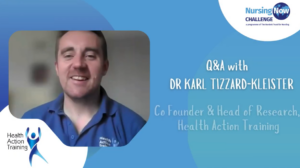
Through initiatives such as Health Action Training, which uses applied drama to strengthen communication and leadership; the Global Solutions Initiative (NNCGSI), which connects nurses to organisations addressing antimicrobial resistance, misinformation, and vaccine equity; and the Global Book Club, which encourages reflective global dialogue, the NNC continues to foster learning and collaboration. Later this month, the launch of Grassroots, a new podcast series, will celebrate nurses and midwives leading change in their communities.
From Global Dialogue to National Action
This global engagement has tangible national impact. Earlier this year, the Burdett Trust for Nursing supported the launch of the State of the World’s Nursing Report 2025, with early-career nurses from the NNC playing a central role. During the launch event at the House of Lords, young nurse leaders addressed England’s Chief Nursing Officer, Duncan Barton, demonstrating how early-career voices are shaping the global health agenda.
That conversation sparked further collaboration. Hazel and I, alongside other NNC leaders, were invited to co-chair the Chief Nursing Officer’s Professional Strategy Working Groups, contributing to the Professional Strategy for 2025–2045. This opportunity has enabled early-career nurses to influence the long-term direction of the profession, turning dialogue into meaningful action.
Looking Ahead
The NNC’s global momentum continues. Upcoming initiatives include a new collaboration on antimicrobial resistance, The Debates series exploring the findings of the State of the World’s Nursing Report 2025, and a Planetary Health programme highlighting nurse and midwifery leadership in tackling the climate crisis and promoting sustainable healthcare systems.
These efforts reflect a profession in motion. The next generation of nurses is not only inheriting leadership roles but actively shaping the structures that will define the future of global health.
As the Nursing Live Conference demonstrated, the strength of the profession lies in connection, collaboration, and courage. By championing and equipping early-career nurses, we are building a global community ready to meet the challenges of today – and to lead the change of tomorrow.